Introduction: Why Smart Homes Are Booming in Singapore (2026)
The rise of smart home adoption in Singapore
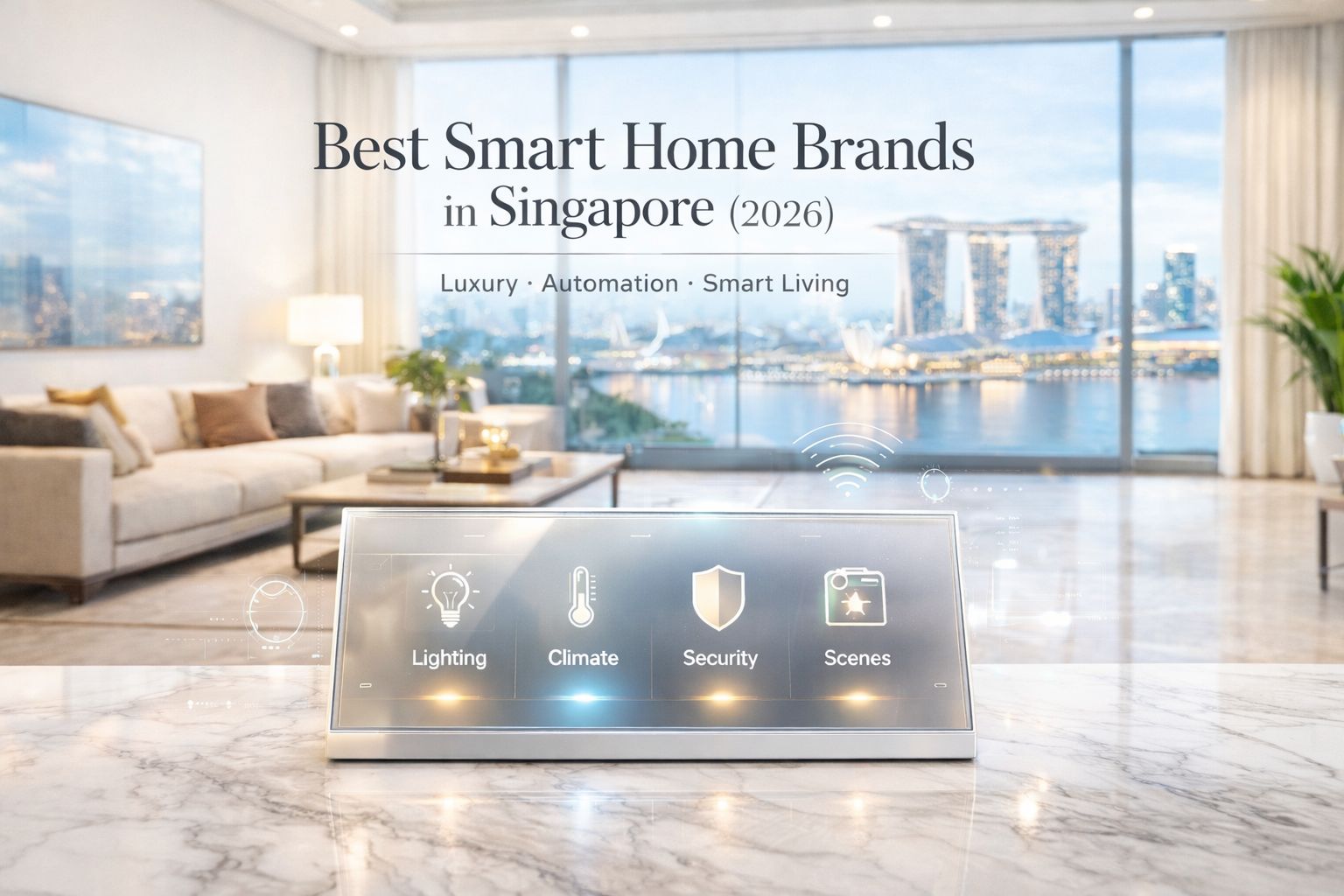
Smart homes are no longer a luxury in Singapore—they’re quickly becoming a standard. When exploring the best smart home brands in Singapore, homeowners are increasingly comparing systems like Legrand, Lutron, KNX, and more to find the right fit.
With rising property prices and smaller living spaces, homeowners are looking for smarter ways to maximize comfort, efficiency, and control. When choosing the best smart home brands in Singapore, homeowners often compare systems like Legrand, Lutron, KNX, and more…
From HDB flats to high-end condos, smart lighting, automated curtains, and centralized control panels are increasingly common. Choosing among the best smart home brands in Singapore is not just about features—it’s about finding a system that fits your lifestyle and long-term plans.
How government regulations & smart living trends are shaping the market
Singapore’s push towards a Smart Nation has accelerated adoption. Energy efficiency, sustainability, and digital infrastructure are key priorities, making smart home systems highly relevant.
Developers are also integrating smart features into new projects, especially in mid to luxury segments. This creates a growing expectation: modern homes should be “smart-ready.”
Who this guide is for
This guide is designed for:
- Homeowners planning renovation or upgrading their home
- Property investors looking to increase rental value
- Interior designers and contractors exploring smart integration
- Anyone comparing smart home brands in Singapore for 2026
Whether you’re starting small or planning a full automation system, this guide will help you make the right decision.
What Is a Smart Home System? (Beginner Guide)
Definition of a smart home ecosystem
A smart home system connects different devices—like lights, switches, air-conditioning, and security—into a centralized network that you can control remotely or automate.
Instead of manually turning things on and off, your home responds to you. For example:
- Lights turn on automatically when you enter
- Aircon adjusts based on temperature
- Curtains close at sunset
This ecosystem is powered by a combination of hardware (devices) and software (apps or control panels).
Key components: automation, control systems, sensors, IoT
A typical smart home setup includes:
- Control system: App, touch panel, or voice assistant
- Automation rules: Pre-set scenarios like “Movie Mode” or “Away Mode”
- Sensors: Motion, temperature, or door sensors
- IoT devices: Smart switches, lights, locks, etc.
These components work together to create a seamless living experience.
Wired vs wireless smart home systems (Singapore context)
- Wired systems (e.g., KNX, Lutron)
More stable, ideal for new builds or full renovation - Wireless systems (e.g., Wi-Fi, Zigbee-based)
Easier to install, suitable for existing homes
Smart home protocols explained
Protocols are how devices communicate:
- KNX: Industry-standard, highly reliable (used in premium homes)
- Zigbee: Wireless, energy-efficient
- Wi-Fi: Common, easy but less stable for large setups
Choosing the right protocol is key to long-term performance.
How to Choose the Best Smart Home Brands in Singapore
Key decision factors (budget, scalability, compatibility)
Choosing the right smart home brand isn’t just about features—it’s about fit.
Start with these core considerations:
- Budget: Entry-level vs luxury systems can differ by 5–10x
- Scalability: Can you expand the system later?
- Compatibility: Works with Apple HomeKit, Google Home, etc.
A cheap system that can’t scale often becomes more expensive long-term.
Condo vs landed property considerations
Your property type matters more than you think.
- Condos / HDBs
Limited wiring flexibility → wireless or hybrid systems are more practical - Landed homes
Full control → wired systems like KNX offer better performance and customization
Integration with existing electrical systems
Not all homes are designed for smart integration.
If you’re renovating, you have the advantage of planning early:
- Concealed wiring for cleaner design
- Dedicated control panels
- Centralized system architecture
If not, you’ll need solutions that work with your current setup.
After-sales support & local installers in Singapore
This is where many homeowners make mistakes.
Even the best system fails without proper support. Always check:
- Local distributor presence
- Certified installers
- Maintenance and troubleshooting support
Smart homes are not “plug and play”—they require long-term reliability.
Overview of Top Smart Home Brands in Singapore (2026)
Why these brands dominate the Singapore market
The Singapore smart home market is relatively mature, but only a handful of brands consistently stand out. These brands are not just popular—they’ve proven reliability, strong local support, and compatibility with modern homes.
Here are the key players dominating 2026:
- Legrand Singapore
- Lutron Singapore
- Bticino Singapore
- KNX Singapore
- Simon Switches
- Ekinex Singapore
Each brand serves a different segment, from affordable setups to ultra-luxury automation.
Quick comparison snapshot (positioning & target users)
- Legrand / Bticino
Balanced mix of design + functionality → ideal for mid to high-end homes - Lutron
Premium lighting control specialist → best for luxury ambiance - KNX / Ekinex
Fully customizable systems → suited for large-scale, high-end projects - Simon Switches
Budget-friendly → practical for basic smart upgrades
How to think about these brands
Instead of asking “which is best,” ask:
- What level of control do I need?
- How much customization do I want?
- What is my budget range?
Legrand Singapore: Premium Modular Smart Living
Brand overview & positioning
Legrand is one of the most recognized names in smart electrical systems, especially in Singapore’s mid to high-end residential projects. It sits in a sweet spot—premium, but still more accessible compared to ultra-high-end systems like Lutron or full KNX setups.
Key smart home products
Legrand offers a wide ecosystem:
- Smart switches and sockets
- Lighting control systems
- Energy management solutions
- App-based home automation
Many of their systems are modular, meaning you can start small and expand over time.
Strengths: design + European engineering
Legrand stands out for combining aesthetic design with practical functionality. Their switches and panels look clean, modern, and fit well into most interior designs.
It’s also relatively easier to integrate compared to more complex systems like KNX.
Limitations: pricing & system complexity
While not the most expensive, it’s still not “budget-friendly.” Also, once you go deeper into their ecosystem, configuration can get slightly technical.
Best suited for
- Condo owners doing renovation
- Homeowners who want a balance between design and smart features
- Mid to high-end residential projects
Lutron Singapore: Lighting Automation Leader
Brand overview & global reputation
Lutron is globally known as the gold standard for lighting control. In Singapore, it’s commonly used in luxury homes, penthouses, and high-end developments.
Core strength: smart lighting control systems
If your priority is lighting—Lutron is hard to beat.
Key capabilities include:
- Smooth dimming (no flicker)
- Scene-based lighting (e.g., “Dinner”, “Movie”)
- Automated schedules
Key features: dimming, scene control, energy efficiency
Lutron systems create a “feeling” in the space, not just functionality. For example, lights can gradually adjust brightness throughout the day to match natural light.
Pros: reliability, seamless experience
- Extremely stable system
- Very polished user experience
- Minimal lag or connection issues
Cons: premium pricing
This is one of the most expensive options in the market, especially for full-home setups.
Best use case
- Luxury homes and landed properties
- Interior design-focused projects
- Homeowners who prioritize ambiance and experience
Bticino Singapore: Italian Design Meets Smart Technology
Brand overview (under Legrand group)
Bticino is part of the Legrand group but focuses more on design-forward smart living. It’s popular among homeowners who care about how their switches and panels look.
Design-focused smart switches & automation
Bticino products often look like part of the interior design itself:
- Glass panels
- Touch-sensitive controls
- Minimalist finishes
Integration capabilities with modern homes
It supports smart automation features like:
- Lighting control
- Intercom systems
- App-based management
It integrates well with modern condos and smart-ready developments.
Pros & cons analysis
Pros:
- Strong design appeal
- Good balance of function + aesthetics
- Backed by Legrand reliability
Cons:
- Slightly more design-focused than system-heavy
- Limited flexibility compared to KNX
Best for
- Design-conscious homeowners
- Condo renovations
- Projects where aesthetics matter as much as function
KNX Singapore: Open Protocol Smart Home Standard
What is KNX and how it works
KNX is not a brand—it’s a global smart home protocol used by multiple manufacturers. Think of it as a “language” that allows different devices to communicate within one system.
Advantages of KNX systems
- Highly customizable
- Extremely stable (wired system)
- Works across multiple brands
This is why KNX is widely used in high-end homes and commercial buildings in Singapore.
Why KNX is popular in Singapore high-end projects
For large landed properties or luxury developments, KNX allows full control:
- Lighting, aircon, curtains, security—all integrated
- Complex automation scenarios
- Centralized system architecture
Challenges: cost, complexity, installer dependency
KNX requires:
- Professional planning
- Certified integrators
- Higher upfront investment
It’s not something you casually install.
Best for
- Fully customized smart homes
- Large landed properties
- Users who want maximum control and scalability
Simon Switches: Affordable Smart Living Solutions
Brand overview & market positioning
Simon is known for being practical and cost-effective. It doesn’t try to compete with luxury systems—it focuses on delivering essential smart features at a lower price point.
Key offerings
- Smart switches
- Basic automation panels
- Entry-level smart control systems
Strengths: cost-effective & functional
If you’re just getting started with smart homes, Simon offers:
- Lower upfront cost
- Simple functionality
- Easier adoption for first-time users
Weaknesses: limited ecosystem vs premium brands
Compared to Legrand or KNX:
- Fewer advanced features
- Limited customization
- Less integration flexibility
Best for
- Budget-conscious homeowners
- Small apartments or HDB units
- Basic smart upgrades (lighting, switches)
Ekinex Singapore: High-End KNX Design Innovation
Brand overview & niche positioning
Ekinex is a premium brand within the KNX ecosystem, known for combining high-end design with advanced automation.
KNX-based design-centric solutions
Unlike typical KNX panels, Ekinex focuses heavily on design:
- Sleek glass interfaces
- Minimalist touch panels
- Customizable finishes
Unique features: minimalist panels, customization
Ekinex allows:
- Fully customizable UI interfaces
- Seamless integration with KNX systems
- High-end architectural alignment
It’s often chosen in projects where design is a priority.
Pros & cons
Pros:
- Stunning design
- Full KNX flexibility
- Premium user experience
Cons:
- Expensive
- Requires KNX system setup
- Not beginner-friendly
Best for
- Luxury homes
- Designer-led projects
- Homeowners who want both aesthetics and deep automation control
Smart Home Brands Comparison (2026 Side-by-Side)
Pricing comparison (budget vs premium tiers)
Comparing the best smart home brands in Singapore side-by-side helps homeowners understand the differences in pricing, features, and long-term scalability before making a decision. Smart home pricing in Singapore varies a lot depending on the system you choose.
- Budget (Simon, basic wireless systems)
~$1,500 – $5,000 for small setups - Mid-range (Legrand, Bticino)
~$5,000 – $15,000 depending on scope - Premium (Lutron, KNX, Ekinex)
$20,000 – $100,000+ for full-home automation
The key difference isn’t just hardware—it’s system architecture and customization.
Feature comparison (automation, lighting, integration)
- Lutron → Best lighting experience
- KNX / Ekinex → Full automation control across all systems
- Legrand / Bticino → Balanced everyday smart home features
- Simon → Basic functionality (switches, simple automation)
Ease of use & user interface comparison
- Lutron and Legrand → very user-friendly
- Bticino → intuitive, design-led interface
- KNX / Ekinex → powerful but requires setup and learning
- Simon → simple, limited complexity
Installation complexity & maintenance
- Wireless systems → faster, less invasive
- Wired systems (KNX, Lutron) → require planning during renovation
Maintenance also depends on installer quality—this is often overlooked.
Compatibility with other ecosystems
- Legrand / Bticino → decent compatibility
- Lutron → strong ecosystem, especially for lighting
- KNX → most flexible (multi-brand integration)
- Simon → more limited
Quick takeaway: There’s no “best” brand—only what fits your budget, home type, and expectations.
Wired vs Wireless Smart Home Systems in Singapore
Which brands support wired systems
- KNX (including Ekinex) → fully wired architecture
- Lutron → primarily wired (some hybrid options)
- Legrand / Bticino → can support hybrid setups
Which brands support wireless or hybrid systems
- Simon → mostly wireless or simple systems
- Legrand / Bticino → flexible for retrofit homes
Pros & cons in Singapore housing context
Wired systems (KNX, Lutron):
- Very stable, minimal lag
- Long lifespan
- Best for large homes
But:
- Higher cost
- Requires renovation planning
Wireless systems:
- Easy to install
- Lower upfront cost
- Ideal for existing homes
But:
- Can face interference
- Less scalable for complex setups
Recommendation based on property type
- HDB / Condo (no major renovation)
→ Go wireless or hybrid - Condo (with renovation)
→ Consider Legrand or Bticino - Landed property / rebuild
→ KNX or Lutron for long-term performance
A common mistake is choosing wireless first, then realizing you’ve outgrown it later. Many of the best smart home brands in Singapore offer both wired and wireless options, so the right choice depends heavily on your property type and renovation stage.
Real-World Use Cases: Smart Homes in Singapore
Condo smart home setup example
A typical condo owner might install:
- Smart switches (living room + bedroom)
- Automated curtains
- App-controlled aircon
This setup is usually wireless or hybrid, costing around $5k–$10k.
Landed property full automation case
For landed homes, the approach is completely different:
- Centralized control panel
- Full lighting automation
- Smart security + gate system
- Integrated aircon and energy monitoring
This is where KNX or Lutron shines, offering a seamless experience across the entire house.
Airbnb / rental property smart automation
Smart homes are also used to increase rental value:
- Smart locks for self check-in
- Automated lighting for energy savings
- Remote monitoring
This reduces operational hassle while improving tenant experience.
Energy-saving smart home scenarios
Smart homes aren’t just about convenience—they can reduce electricity bills:
- Lights turn off automatically when no one is home
- Aircon adjusts based on room occupancy
- Scheduled usage during off-peak hours
Expert tip: Start with energy-saving automation—it delivers real ROI quickly.
Cost Breakdown: How Much Does a Smart Home Cost in Singapore?
When evaluating the best smart home brands in Singapore, cost is often one of the biggest deciding factors for homeowners.
Entry-level smart home setup (SGD range)
For small upgrades:
- Smart switches
- Basic automation (timers, app control)
Estimated cost:
$1,500 – $5,000
Suitable for HDBs or small condos.
Mid-range smart home investment
Includes:
- Multiple rooms automation
- Curtain motors
- Central app control
Estimated cost:
$5,000 – $15,000
This is where most homeowners land.
High-end / luxury smart home cost
Full system includes:
- Central control system
- Scene automation
- Integrated lighting, aircon, security
Estimated cost:
$20,000 – $100,000+
Common for landed properties or penthouses.
Hidden costs (installation, programming, maintenance)
Many people underestimate:
- Programming fees
- System configuration
- After-sales servicing
Also, changes later can cost more if not planned early.
Reality check: Smart home is not just a product—it’s a system investment.
Integration & Compatibility: What You Must Know
Compatibility with Apple HomeKit, Google Home, Alexa
Not all systems play nicely with popular ecosystems.
- Legrand / Bticino → supports some integrations
- Lutron → strong integration with Apple HomeKit
- KNX → requires gateway or customization
- Simon → limited compatibility
Always check before committing.
Multi-brand integration challenges
Mixing brands sounds flexible—but can get messy:
- Different apps
- Delayed responses
- Limited automation between systems
For example, combining a budget switch system with a premium lighting system may not work smoothly.
Future-proofing your smart home system
Technology evolves quickly, so you need to plan ahead:
- Choose systems with strong ecosystem support
- Avoid overly proprietary setups
- Ensure firmware updates and long-term support
Practical advice before you decide
Ask your installer:
- Can this system expand later?
- What happens if I want to add new features?
- Is there local support in Singapore?
Expert tip: It’s better to invest slightly more upfront than to rebuild your system later.
Common Mistakes to Avoid When Choosing a Smart Home Brand
Choosing based on price only
This is the most common mistake. Many homeowners start with: “Which is the cheapest?”—but smart homes don’t work like regular appliances.
A cheaper system may:
- Lack scalability
- Have poor integration
- Become obsolete quickly
You might end up replacing everything within a few years, which costs more in the long run.
Ignoring system scalability
Your needs will grow. Today you want smart lighting, tomorrow you might want:
- Smart curtains
- Security integration
- Energy monitoring
If your system can’t scale, you’ll hit a wall very quickly.
Not considering local support
Even premium systems can fail if there’s no proper support.
Always check:
- Is there a local distributor?
- Are there certified installers in Singapore?
- How fast is troubleshooting support?
Smart homes require ongoing support—not just installation.
Overcomplicating automation
Some homeowners try to automate everything from day one.
Result:
- Confusing user experience
- Systems not used properly
- Family members getting frustrated
Start simple, then expand.
Poor planning during renovation stage
This is a costly mistake.
If you don’t plan early:
- Wiring may not support your system
- You may need hacking or rework
- Design aesthetics may be compromised
Expert tip: Smart home planning should happen before renovation starts, not after.
Expert Tips: How to Build a Smart Home That Actually Works
Start with core functions (lighting, security)
Don’t try to build everything at once.
Focus on high-impact areas first:
- Lighting automation
- Smart locks / security
- Aircon control
These deliver immediate value and are used daily.
Choose a scalable ecosystem
Always think 2–3 steps ahead.
A good system should allow you to:
- Add more devices later
- Upgrade features without replacing everything
- Integrate new technology easily
KNX and modular systems are strong in this area.
Work with certified installers in Singapore
Your installer matters more than the brand.
A good installer will:
- Design proper system architecture
- Recommend what you actually need
- Avoid unnecessary complexity
A bad installer can make even the best system feel broken.
Plan automation scenarios, not just devices
Most people think in terms of products. Experts think in scenarios.
Examples:
- “Away Mode” → turns off lights, locks doors, lowers aircon
- “Movie Mode” → dims lights, closes curtains
This is what makes a home truly “smart.”
Balance design vs functionality
Beautiful panels are nice—but usability matters more.
Ask yourself:
- Is it easy for guests or family to use?
- Can everything be controlled simply?
Expert tip: The best smart home is one that feels invisible, not complicated.
Future Trends in Smart Homes (Singapore 2026 & Beyond)
AI-powered home automation
Smart homes are moving beyond fixed rules into AI-driven behavior.
Instead of setting schedules manually, systems will:
- Learn your habits
- Predict your preferences
- Adjust automatically
For example, your home may adjust lighting based on your daily routine without input.
Energy-efficient smart homes & sustainability
With rising energy costs, efficiency is becoming a priority.
Future systems will:
- Monitor real-time energy usage
- Optimize consumption automatically
- Integrate with solar systems
This aligns with Singapore’s push towards sustainability.
Voice + gesture control evolution
Voice assistants are already common, but they’re improving rapidly.
We’re seeing:
- Faster response times
- Better contextual understanding
- Multi-language support
Gesture-based control is also emerging, especially in high-end homes.
Integration with smart cities & IoT infrastructure
Singapore’s Smart Nation initiative means homes won’t exist in isolation.
Future integration may include:
- Smart grids
- Traffic and environment data
- Community-wide automation
Your home could eventually interact with the city itself.
Why You Can Trust This Guide
Based on real Singapore market insights
This guide is built around how smart homes actually work in Singapore—not generic global advice.
It considers:
- Local housing types (HDB, condo, landed)
- Renovation practices
- Availability of brands and installers
Consideration of local regulations & housing types
Smart home implementation differs greatly depending on property type.
For example:
- HDB limitations vs landed flexibility
- Condo renovation restrictions
These factors are often ignored in general guides.
Comparison grounded in practical use cases
Instead of listing features blindly, this guide focuses on:
- Real-life usage scenarios
- Cost vs value
- Long-term usability
This helps you make decisions that actually work in daily life.
Neutral, brand-agnostic evaluation
There’s no “one-size-fits-all” answer.
Each brand is evaluated based on:
- Strengths
- Limitations
- Best-fit use cases
The goal is to help you choose what fits your situation—not push a specific product.
Final Conclusion: Which Smart Home Brand Is Best for You?
Best overall smart home brand in Singapore
If you want a balance of design, functionality, and flexibility:
→ Legrand / Bticino are strong all-rounders
They’re suitable for most homeowners without going too complex or too expensive.
Best for budget users
If you’re starting small or testing smart home features:
→ Simon Switches
Simple, affordable, and good enough for basic automation.
Best for luxury homes
If budget is not a constraint and you want the best experience:
→ Lutron (for lighting)
→ KNX / Ekinex (for full-home automation)
These systems offer unmatched performance and customization.
Best for customization & scalability
If you want long-term flexibility and full control:
→ KNX ecosystem
It allows integration across multiple brands and future expansion.
How to make your final decision
Instead of asking “which brand is best,” ask:
- What is my budget?
- What level of automation do I need?
- Am I planning long-term or short-term?
In summary, selecting the best smart home brands in Singapore requires balancing functionality, scalability, and long-term usability. You can explore more details and real project examples directly on the LivingArt website at https://livingart.sg/projects/.
FAQ: Best Smart Home Brands in Singapore (2026)
What is the best smart home system in Singapore?
There’s no universal “best” system. For most homeowners, Legrand or Bticino offers a strong balance of price, features, and design. For high-end homes, KNX or Lutron is usually the preferred choice.
What are the best smart home brands in Singapore?
The best smart home brands in Singapore include Legrand, Lutron, Bticino, KNX-based systems, Simon, and Ekinex. Each brand serves different needs, from budget-friendly setups to fully cstomized luxury automation systems.
Is KNX better than wireless smart home systems?
KNX is more stable, scalable, and suitable for large homes. However, it requires higher investment and planning. Wireless systems are easier to install and better for existing homes or smaller setups.
How much does a smart home cost in Singapore?
Costs vary widely:
- Entry-level: $1,500 – $5,000
- Mid-range: $5,000 – $15,000
- High-end: $20,000+
The final price depends on system type, home size, and level of automation.
Which smart home brand is best for condos?
For most condos, Legrand or Bticino works well due to flexibility and easier integration. Wireless or hybrid systems are usually more practical than fully wired setups.
Are smart homes worth it in Singapore?
Yes—especially for convenience, energy savings, and property value. Smart features can also improve rental appeal and long-term usability.
Can I install smart home systems after renovation?
Yes, but your options may be limited. Wireless systems are more suitable for post-renovation setups, while wired systems require planning earlier.
Which brands support Apple HomeKit in Singapore?
Lutron has strong HomeKit integration. Legrand and Bticino support varies depending on the system. KNX may require additional configuration or gateways.
Do smart home systems increase property value?
In many cases, yes—especially in mid to high-end properties. Smart features can make a home more attractive to buyers or tenants, particularly in Singapore’s competitive property market.