Introduction to Smart Home Regulations in Singapore
What Defines a Smart Home in 2026
In 2026, a “smart home” in Singapore goes far beyond just voice assistants or app-controlled lighting. It refers to an integrated ecosystem of connected devices—commonly known as Internet of Things (IoT) devices—that automate, monitor, and optimize daily living.
These systems typically include:
- Smart lighting and switches
- Home security systems (CCTV, motion sensors, smart locks)
- Smart air conditioning and energy management systems
- Voice assistants and centralized control hubs
- Connected appliances like refrigerators, washing machines, and robot vacuums
What differentiates modern smart homes today is interconnectivity and automation. Devices are no longer standalone; they communicate with each other.
Why Regulations Matter for Homeowners & Businesses
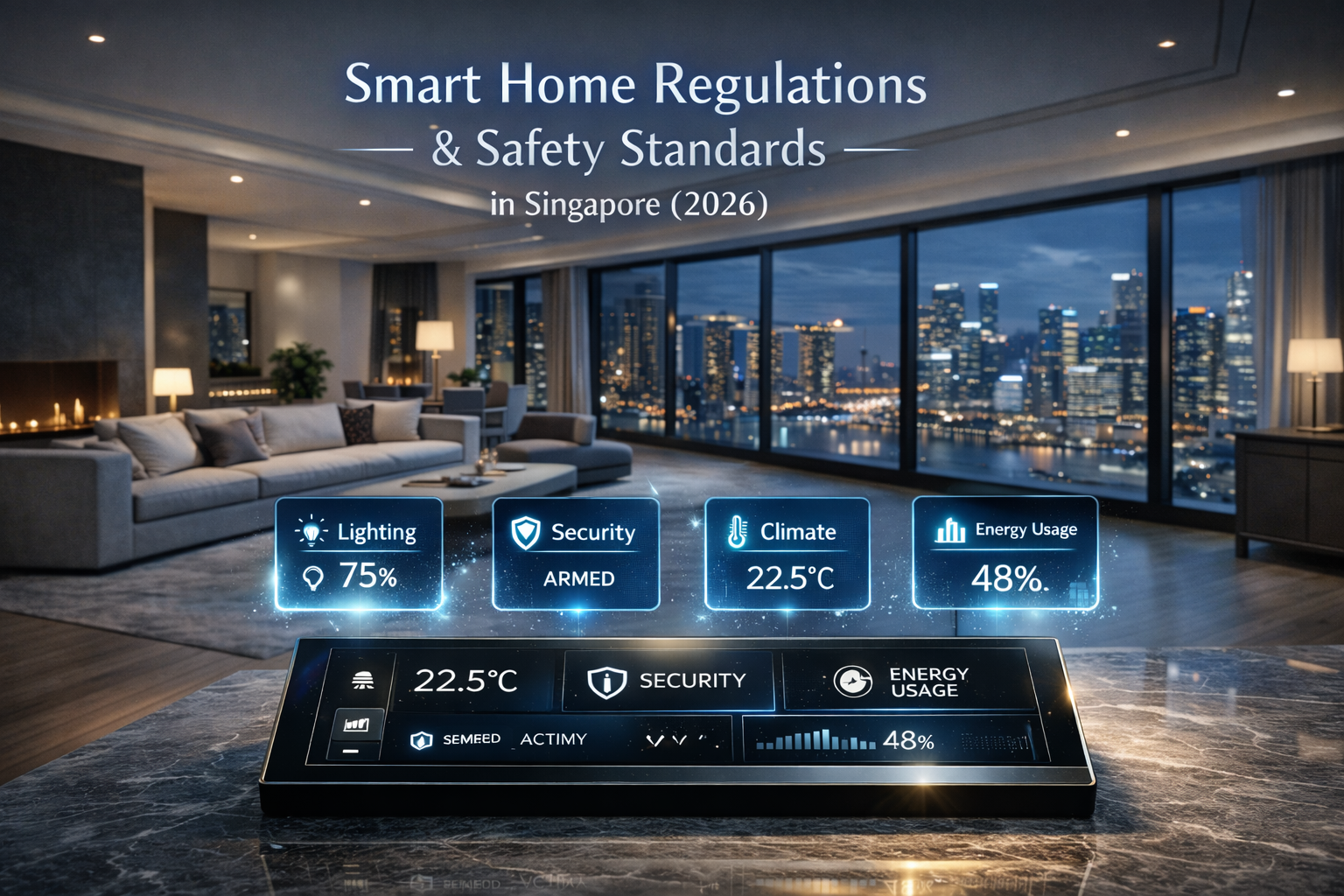
Smart home regulations in Singapore are not just bureaucratic requirements—they directly impact safety, legal compliance, and long-term reliability. For homeowners planning a proper setup, working with a smart home provider in Singapore ensures your system is compliant from the start.
For homeowners, improper installation or use of non-certified devices can lead to:
- Electrical hazards or fire risks
- Data breaches from unsecured devices
- Voided insurance claims in case of incidents
For businesses, especially smart home providers like LivingArt.sg, compliance is even more critical. It affects:
- Customer trust and brand credibility
- Legal liability in case of system failures
- Eligibility to deploy certified products in Singapore
Overview of Singapore’s Regulatory Landscape
Singapore is known for its strict and well-structured regulatory framework, and smart homes are no exception. Instead of one single authority, multiple agencies oversee different aspects of smart home regulations.
Here’s how the ecosystem is structured:
- IMDA (Infocomm Media Development Authority)
Regulates telecommunications and IoT device connectivity, including security labeling schemes - CSA (Cyber Security Agency of Singapore)
Focuses on cybersecurity standards and best practices for connected devices - Enterprise Singapore (ESG)
Oversees product safety requirements, including Safety Mark certification - EMA (Energy Market Authority)
Governs electrical systems and energy-related smart devices - BCA (Building and Construction Authority)
Provides guidelines for building safety and installation standards - PDPC (Personal Data Protection Commission)
Enforces data privacy laws under the PDPA
This multi-agency structure ensures that smart homes are regulated holistically—from device safety and electrical compliance to cybersecurity and personal data protection.
For homeowners and developers, this means compliance is not just about buying the right device—it’s about ensuring the entire system, installation process, and data handling practices meet Singapore’s standards.
Key Authorities Governing Smart Home Standards in Singapore
Understanding smart home regulations in Singapore requires clarity on who controls what. Unlike simpler markets, Singapore adopts a multi-agency regulatory model, where each authority governs a specific aspect—ranging from electrical safety to cybersecurity and data privacy.
For homeowners and smart home providers, this means compliance is not a single checkbox. It’s a combination of approvals, certifications, and best practices across different domains.
Role of Infocomm Media Development Authority (IMDA)
The Infocomm Media Development Authority (IMDA) plays a central role in regulating connected devices and communication systems in Singapore.
In the context of smart homes, IMDA is responsible for:
- Approving telecommunications equipment (e.g., smart hubs, routers, wireless devices)
- Ensuring devices comply with Singapore’s network standards
- Overseeing the Cybersecurity Labelling Scheme (CLS) for IoT devices
The CLS is particularly important in 2026. It rates devices based on their cybersecurity level, helping consumers identify whether a device is secure enough for home use.
Enterprise Singapore (ESG) and Product Safety
Enterprise Singapore oversees product safety standards, including the widely recognized Safety Mark certification.
This certification is mandatory for certain electrical and electronic products sold in Singapore. For smart homes, this includes:
- Smart switches
- Smart plugs
- Power-related devices
The Safety Mark ensures that products meet strict safety requirements, such as:
- Proper insulation
- Fire resistance
- Safe voltage handling
A common mistake homeowners make is buying cheaper smart devices from overseas platforms that do not carry the Safety Mark. While they may work initially, they can pose serious risks over time.
Energy Market Authority (EMA) for Electrical Systems
The Energy Market Authority (EMA) governs electrical installations and energy usage in Singapore. For smart homes, EMA regulations come into play when dealing with:
- Smart lighting systems
- Smart air-conditioning controls
- Energy monitoring systems
- Load management devices
EMA requires that certain installations be handled by a Licensed Electrical Worker (LEW), especially when modifications involve wiring or distribution boards.
This is crucial because smart home systems often integrate directly with a property’s electrical infrastructure.
Building and Construction Authority (BCA) Guidelines
The Building and Construction Authority (BCA) focuses on structural and building safety, which becomes relevant during smart home installations. This is especially important for:
- HDB flats (public housing)
- Renovation projects involving embedded smart systems
- Concealed wiring or ceiling installations
BCA guidelines ensure that smart home installations do not:
- Compromise structural integrity
- Interfere with fire safety systems
- Violate renovation rules
Cyber Security Agency of Singapore (CSA)
The Cyber Security Agency (CSA) is responsible for safeguarding Singapore’s digital infrastructure, including consumer-level cybersecurity awareness. In smart homes, CSA focuses on:
- Educating users on IoT vulnerabilities
- Promoting secure device configurations
- Supporting frameworks like the IMDA CLS
CSA highlights common risks such as:
- Weak default passwords
- Unsecured Wi-Fi networks
- Lack of firmware updates
Core Smart Home Safety Standards You Must Follow
Smart home regulations in Singapore ultimately translate into one key outcome: ensuring your home is safe, secure, and compliant across multiple risk areas. While different authorities oversee different aspects, the standards can be grouped into four core pillars—electrical safety, fire safety, network reliability, and data protection.
Whether you’re a homeowner planning a setup or a smart home provider designing a system, these are the non-negotiable safety standards you must follow.
Electrical Safety Requirements for Smart Devices
Electrical safety is the foundation of any smart home system. Most smart devices—such as switches, plugs, and sensors—are directly connected to your home’s power supply. In Singapore, devices must:
- Support 230V / 50Hz electrical standards
- Be certified under the Safety Mark scheme (where applicable)
- Be compatible with existing wiring infrastructure
Failure to meet these requirements can result in:
- Overheating devices
- Short circuits
- Increased fire risk
A common issue occurs when homeowners import smart switches from overseas markets (e.g., US or China) that are not designed for Singapore’s voltage system. While they may function initially, long-term usage can degrade performance and create hidden hazards.
Fire Safety Compliance for Smart Installations
Smart home systems often involve additional wiring, concealed installations, and continuous power usage—all of which can affect fire safety.
Singapore Civil Defence Force (SCDF) guidelines emphasize:
- Avoiding overloaded circuits
- Ensuring proper cable insulation
- Using fire-rated materials for concealed wiring
- Maintaining access to fire safety systems
Smart homes can unintentionally increase fire risk if poorly planned. For instance:
- Too many devices connected to a single circuit
- Low-quality adapters or extension setups
- Hidden wiring without proper heat dissipation
Wireless Communication and Network Safety
Smart homes rely heavily on wireless communication—Wi-Fi, Zigbee, Z-Wave, or Bluetooth. While convenient, unstable or poorly configured networks can lead to both performance issues and security risks. Key requirements include:
- Stable and secure home Wi-Fi network
- Proper router configuration (strong passwords, updated firmware)
- Segmentation of smart devices from personal networks (advanced setup)
Network instability can cause:
- Devices disconnecting or malfunctioning
- Delayed automation triggers
- Increased vulnerability to unauthorized access
Expert tip: Consider using a dedicated network (or VLAN) for smart devices, especially in larger setups. This improves both performance and cybersecurity.
Data Privacy and Cybersecurity Regulations
With smart homes collecting data—from camera footage to voice commands—data privacy is a critical concern in Singapore.
Under the Personal Data Protection Act (PDPA), users and providers must ensure:
- Personal data is collected and used responsibly
- Devices have secure authentication mechanisms
- Data transmission is encrypted
Smart home devices commonly collect:
- Video recordings (CCTV)
- Audio data (voice assistants)
- Behavioral patterns (usage habits)
Best practices for compliance:
- Change default usernames and passwords immediately
- Enable two-factor authentication where available
- Regularly update device firmware
- Disable unused features (e.g., remote access if not needed)
IMDA and IoT Device Regulations (2026 Update)
As smart homes become more common in Singapore, the government has placed increasing emphasis on cybersecurity at the device level. This is where the Infocomm Media Development Authority (IMDA) plays a critical role—particularly through its regulation of Internet of Things (IoT) devices.
In 2026, one of the most important frameworks homeowners and smart home providers must understand is the Cybersecurity Labelling Scheme (CLS). This scheme helps consumers identify how secure a smart device is before purchasing or installing it.
Mandatory IoT Security Labelling Scheme
The IMDA Cybersecurity Labelling Scheme (CLS) is designed to improve transparency around the security of IoT devices such as:
- Smart cameras
- Smart door locks
- Smart hubs and gateways
- Home routers and Wi-Fi devices
Under this scheme, devices are assigned a security rating (Level 1 to Level 4), based on their cybersecurity features and testing standards.
While not all devices are mandatory under CLS, certain categories—especially those that pose higher privacy risks like cameras—are increasingly expected to comply.
The CLS aims to address a key issue: most consumers cannot assess cybersecurity risk on their own. By introducing visible labels, it simplifies decision-making.
Device Certification Requirements in Singapore
Beyond cybersecurity labeling, smart devices in Singapore may also require equipment registration and approval under IMDA regulations.
This applies to devices that:
- Use wireless communication (Wi-Fi, Bluetooth, Zigbee)
- Connect to public telecommunications networks
- Transmit radio frequencies
Manufacturers or distributors must ensure that these devices meet Singapore’s technical standards before being sold or deployed.
For consumers, this means:
- Avoid purchasing grey-market or unregistered devices
- Verify that devices are approved for use in Singapore
- Ensure compatibility with local networks
Expert tip: Always purchase smart home devices from authorized distributors in Singapore. This ensures both compliance and after-sales support.
Consumer Awareness and Security Ratings
The CLS is not just a regulatory tool—it’s also an education mechanism for consumers.
By displaying clear security levels, IMDA encourages users to think beyond features and price, and instead consider:
- How well the device protects personal data
- Whether the device receives regular security updates
- The manufacturer’s commitment to cybersecurity
This shift is important because smart home devices often remain in use for years, making long-term security critical.
Mini buying guide:
- Level 1: Basic security (minimum standard)
- Level 2: Enhanced protection (e.g., secure communications)
- Level 3: Tested against common vulnerabilities
- Level 4: Independently tested and highest security assurance
What Each Security Level Means
Understanding CLS levels helps you make smarter purchasing decisions.
- Level 1
Devices meet baseline requirements such as unique default passwords. Suitable for low-risk devices but not ideal for sensitive use. - Level 2
Includes stronger security features like secure software updates and better authentication methods. - Level 3
Devices are tested against common cybersecurity threats, offering a higher level of protection for everyday smart home use. - Level 4
The highest level. Devices undergo rigorous independent testing and are suitable for high-risk environments, such as homes with extensive surveillance systems.
Practical insight: For devices like smart locks or cameras, aim for Level 3 or Level 4. These devices handle sensitive data and should not rely on basic protection.
Electrical Installation Standards for Smart Homes
Licensed Electrical Worker (LEW) Requirements
In Singapore, anything that involves modifying your home’s electrical system is not DIY territory.
If your smart home setup includes:
- Replacing wall switches
- Adding new wiring points
- Integrating smart lighting systems
You are required to engage a Licensed Electrical Worker (LEW).
This is not just a formality—it ensures that installations are safe, compliant, and do not overload your electrical system.
Safe Integration with Existing Home Systems
Smart homes are often layered on top of existing infrastructure, especially in HDB flats and older condos.
This creates challenges such as:
- Limited wiring capacity
- Older electrical panels not designed for smart loads
- Compatibility issues with smart switches or dimmers
Smart Switches, Sensors, and Power Load Considerations
Smart devices may seem small, but collectively they add load to your system.
Things to consider:
- Total power consumption across devices
- Heat buildup behind smart switches
- Continuous power draw from always-on devices
Mini checklist before installation:
- Check if your distribution board can handle additional load
- Use certified smart switches designed for Singapore standards
- Avoid mixing incompatible brands or systems
Expert tip:
Always plan your smart home system as a whole—not device by device. This prevents overload and ensures long-term stability.
Fire Safety Guidelines for Smart Home Systems
SCDF Fire Code Compliance
The Singapore Civil Defence Force (SCDF) provides fire safety guidelines that apply to all electrical and electronic installations—including smart homes.
Key principles include:
- Preventing overheating of electrical components
- Ensuring proper cable management
- Avoiding obstruction of fire safety systems
Smart home setups often involve hidden wiring and continuous power usage, which makes fire safety even more important.
Smart Smoke Detectors and Alarm Integration
One advantage of smart homes is enhanced fire detection.
Modern systems can integrate:
- Smart smoke detectors
- Mobile alerts for fire incidents
- Automated responses (e.g., turning off power, unlocking doors)
This improves response time and can significantly reduce damage during emergencies.
Avoiding Overloaded Circuits and Hazards
The biggest fire risk in smart homes usually comes from overloading circuits.
Common mistakes include:
- Plugging multiple smart devices into a single socket
- Using low-quality adapters or extension cords
- Poor ventilation for routers and hubs
Over time, heat builds up—especially in enclosed spaces like TV consoles or cabinets.
Practical safety tips:
- Distribute devices across multiple circuits
- Avoid stacking adapters or plugs
- Ensure proper airflow around hubs and routers
- Use only certified accessories
Expert tip:
If your setup feels “messy” with too many plugs or adapters, that’s already a warning sign. Clean, structured installations are not just aesthetic—they’re safer.
Smart Home Cybersecurity Standards in Singapore
Smart homes are convenient, but they also open the door to cybersecurity risks if not properly secured. In Singapore, agencies like CSA and IMDA strongly emphasize basic cyber hygiene for IoT devices.
Most issues don’t come from “advanced hacking”—they come from simple mistakes.
Common vulnerabilities include:
- Default passwords that were never changed
- Outdated firmware
- Devices connected to unsecured Wi-Fi
Once one device is compromised, it can expose your entire home network.
Best Practices for Securing IoT Devices
You don’t need to be technical to secure your smart home. Start with these:
- Change all default usernames and passwords
- Use strong Wi-Fi encryption (WPA2/WPA3)
- Update firmware regularly
- Disable features you don’t use (e.g., remote access)
If you want to go one level higher:
- Separate your smart devices from your main network
- Use a dedicated router or guest network
Expert tip:
Security is not a one-time setup. Treat it like maintenance—review your system every few months.
Approved Smart Home Devices and Certifications
In Singapore, not all smart home devices are allowed or recommended for use. Choosing the right device isn’t just about features—it’s about certification and compliance.
The two main things to look for:
- Safety Mark (Enterprise Singapore) → for electrical safety
- IMDA approval → for wireless and communication devices
These certifications ensure that devices:
- Work safely with Singapore’s electrical system
- Don’t interfere with local networks
- Meet minimum safety and performance standards
How to Verify Certified Devices Before Purchase
Before buying any device, especially online:
- Check for Safety Mark label (for switches, plugs, etc.)
- Verify IMDA registration for wireless devices
- Buy from authorized Singapore sellers
Common mistake:
Buying cheaper smart devices from overseas platforms. They may look identical, but lack certification—and that’s where risks come in.
Installation Compliance: DIY vs Professional Setup
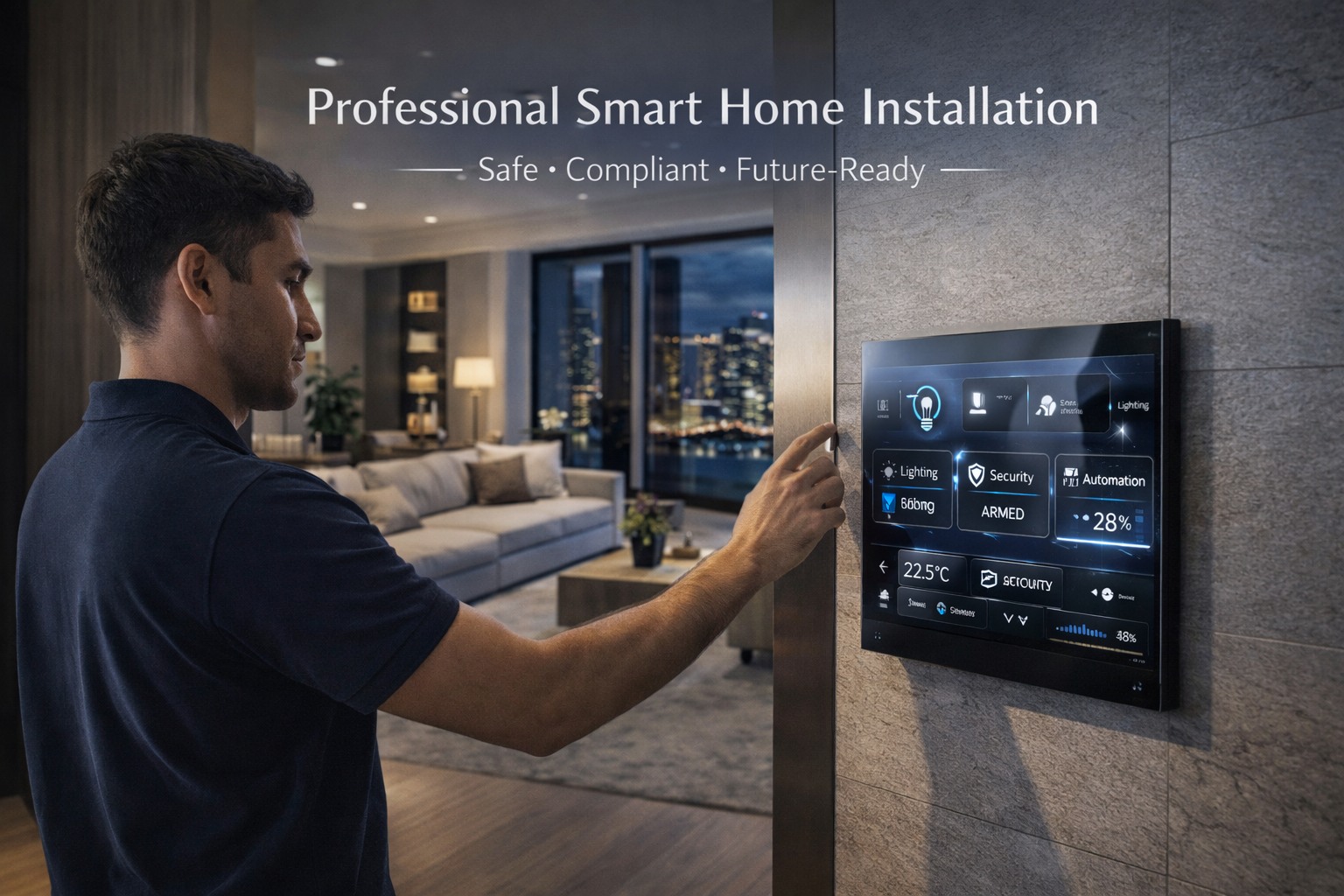
One of the biggest decisions homeowners face is whether to DIY their smart home or hire a professional.
For simple setups like:
- Smart bulbs
- Plug-and-play sensors
DIY is generally fine.
But once your system involves:
- Wall switches
- Wiring changes
- Integrated automation systems
You should seriously consider professional installation.
Risks of DIY Smart Home Installation
DIY setups often overlook:
- Electrical load limits
- Wiring compatibility
- Long-term safety
This can lead to:
- Frequent system failures
- Circuit trips
- Safety hazards behind walls (which you won’t see immediately)
Benefits of Hiring Licensed Installers
Working with professionals ensures:
- Compliance with Singapore regulations
- Proper system planning (not just device setup)
- Clean, safe installation
Expert tip:
Think of smart home setup like renovation—not just “plug and play.” A proper foundation makes everything more stable.
Smart Home Regulations for HDB vs Private Properties
Not all properties in Singapore follow the same rules. Smart home installations in HDB flats are generally more restricted compared to private properties.
HDB Renovation Guidelines for Smart Systems
For HDB, you must follow strict renovation rules:
- No hacking of structural walls
- Limited drilling in certain areas
- Electrical works must follow HDB-approved guidelines
Smart home installations that involve concealed wiring or major changes must be planned carefully. For a better understanding of real implementations, you can refer to smart home projects in Singapore to see how systems are properly installed in different property types.
Condo and Landed Property Considerations
Private properties (condos, landed homes) offer more flexibility:
- Easier integration of advanced systems
- Fewer restrictions on wiring and layout
- More room for centralized smart systems
However, condo management may still impose their own rules, especially for common areas or external installations (e.g., cameras).
Permit Requirements and Restrictions
Across all property types:
- Major electrical work → requires licensed professionals
- Structural changes → may require approval
- External installations → must respect privacy and building rules
Expert tip:
Always check property-specific guidelines before installation. It’s easier to plan upfront than redo everything later.
Integration with Smart Grids and Energy Efficiency Standards
Smart homes in Singapore are no longer just about convenience—they are increasingly tied to energy efficiency and smart grid integration.
With the push towards sustainability, agencies like EMA encourage the use of energy-efficient smart devices that can monitor and optimize electricity usage in real time.
Common smart energy features include:
- Smart aircon control based on usage patterns
- Energy monitoring plugs
- Automated lighting schedules
- Integration with solar panels (for landed homes)
These systems help homeowners understand where electricity is being used—and where it’s being wasted.
Energy Efficiency Labelling Scheme (EELS)
Certain appliances in Singapore must comply with the Energy Efficiency Labelling Scheme (EELS).
This means:
- Appliances are rated based on energy consumption
- Higher ratings = lower long-term electricity cost
Expert tip:
A smart home is only “smart” if it helps you save energy, not just automate things. Always combine automation with efficiency.
Smart Surveillance & Home Security Regulations
Security is one of the main reasons people invest in smart homes—but it also comes with legal boundaries.
Legal Considerations for CCTV Installation
In Singapore, installing CCTV inside your home is allowed. However, issues arise when cameras:
- Capture public areas (corridors, lifts)
- Record neighbors or shared spaces
This can lead to privacy concerns, especially in HDB or condo environments.
Privacy Boundaries in Residential Areas
Even within your own unit, you should consider:
- Whether guests are being recorded without consent
- Whether cameras are placed in sensitive areas
Video Recording and Data Storage Rules
From a PDPA perspective:
- Data should be stored securely
- Access should be restricted
- Recordings should not be kept longer than necessary
Expert tip:
Use cameras for security—not surveillance. Position them carefully to avoid unnecessary privacy risks.
Benefits of Following Smart Home Regulations
Following smart home regulations may feel like extra work, but the benefits are very real—especially in Singapore’s strict environment.
Enhanced Safety and Risk Reduction
Compliant systems reduce risks such as:
- Electrical faults
- Fire hazards
- System failures
This creates a safer living environment for you and your family.
Long-Term Cost Savings
While certified devices may cost more upfront, they:
- Last longer
- Perform more reliably
- Reduce repair and replacement costs
Increased Property Value in Singapore
A properly installed smart home system can increase your property’s appeal—especially for buyers looking for modern, ready-to-move-in homes.
Real insight:
Buyers are more confident in homes where systems are professionally installed and compliant, rather than DIY setups with unknown risks.
Expert tip:
Think long-term. Compliance is not just about avoiding problems—it’s about building a better asset.
Common Mistakes to Avoid in Smart Home Setup
Many smart home issues don’t come from bad products—they come from poor decisions during setup.
Using Non-Certified Devices
This is the most common mistake.
Cheaper devices may:
- Lack safety certification
- Be incompatible with local systems
- Pose long-term risks
Ignoring Cybersecurity Settings
Leaving default passwords or skipping updates makes your system vulnerable.
This is one of the easiest mistakes to fix—but often overlooked.
Overloading Electrical Systems
Adding too many devices without planning can:
- Trip circuits
- Cause overheating
- Reduce system lifespan
Poor Network Configuration
A weak or unstable network leads to:
- Devices disconnecting
- Delayed automation
- Security vulnerabilities
Expert tip:
If your smart home feels “unstable” or messy, it’s usually a sign that the setup wasn’t planned properly from the start.
Expert Tips for Safe and Compliant Smart Homes
By this point, you can see that building a smart home in Singapore is not just about buying devices—it’s about doing it properly. Here are some practical tips that actually make a difference in real setups.
First, always prioritize certified devices. It’s tempting to save money, but uncertified products are where most long-term problems start—especially electrical and connectivity issues.
Second, plan your system before installing anything. Don’t buy devices one by one randomly. Think in terms of:
- Whole-home automation flow
- Device compatibility
- Future expansion
If you’re unsure how to structure your setup, it’s worth consulting a team of smart home specialists in Singapore before making any decisions.
Third, keep your system updated. Many homeowners install once and forget. But firmware updates are critical for both performance and security.
Fourth, separate convenience from safety. Just because something “works” doesn’t mean it’s safe or compliant.
Simple rule to follow:
- Electrical → use licensed professionals
- Network → secure properly
- Devices → certified only
Real-World Use Cases of Smart Home Compliance
Case Study: HDB Smart Home Upgrade
A homeowner in a 4-room HDB wanted a full smart lighting system. Instead of DIY, they engaged a licensed installer.
Result:
- Clean wiring
- No circuit overload issues
- Smooth automation across rooms
More importantly, everything complied with HDB and electrical guidelines—no future rework needed.
Case Study: Condo Smart Security System
A condo owner installed smart cameras and door locks.
Instead of placing cameras facing the corridor, they:
- Adjusted angles to avoid neighbor privacy issues
- Used CLS-rated devices
- Secured access with strong authentication
This avoided complaints and ensured compliance with privacy expectations.
Lessons Learned from Non-Compliant Installations
In contrast, poorly planned setups often lead to:
- Devices disconnecting frequently
- Overheating switches
- Privacy complaints
The difference is rarely the device—it’s the approach.
Future Trends in Smart Home Regulations (2026–2030)
Smart home regulations in Singapore will only get stricter over time.
AI-Driven Smart Home Governance
Future systems may include AI that:
- Detects unusual activity
- Flags security risks automatically
- Optimizes energy usage
This will likely come with new compliance standards.
Stricter IoT Cybersecurity Enforcement
Expect:
- More mandatory CLS requirements
- Higher minimum security standards
- Stronger enforcement on device manufacturers
Devices without proper security may eventually be restricted.
Integration with Smart Nation Initiatives
Singapore’s Smart Nation push means homes will increasingly connect with:
- Smart grids
- Urban infrastructure
- Digital identity systems
Why Choose a Professional Smart Home Provider in Singapore
At some point, most homeowners realize that smart home setup is not just about buying gadgets—it’s about getting everything to work properly together.
A professional provider ensures:
- Proper system design (not trial-and-error setup)
- Compliance with Singapore regulations
- Safe electrical integration
- Reliable long-term performance
Compliance Assurance and Risk Reduction
Instead of guessing what’s allowed, professionals already know:
- Which devices are certified
- What installations require licensing
- How to avoid compliance issues
End-to-End Installation and Support
From planning to installation to after-sales support, everything is handled properly.
How LivingArt.sg Ensures Regulatory Compliance
A provider like LivingArt.sg focuses on:
- Using certified, approved devices
- Structuring systems for safety and scalability
- Ensuring installations meet local guidelines
Smart Home Compliance Checklist (2026)
Before finalizing your smart home setup, run through this quick checklist.
Device Certification Checklist
- Safety Mark (if applicable)
- IMDA-approved devices
- CLS rating checked (for IoT devices)
Installation Safety Checklist
- Licensed electrician used (if needed)
- No overloaded circuits
- Proper wiring and ventilation
Cybersecurity Checklist
- Default passwords changed
- Firmware updated
- Secure Wi-Fi network
Summary: Building a Safe and Future-Ready Smart Home in Singapore
Smart homes are no longer a luxury—they’re becoming a standard part of modern living in Singapore.
But with that comes responsibility.
A well-designed smart home is not just about convenience. It should be:
- Safe (electrically and structurally)
- Secure (from cyber threats)
- Compliant (with local regulations)
The biggest difference between a “good” and “bad” smart home setup is not the devices—it’s the planning and execution.
If you approach it properly from the start, you get:
- Fewer problems
- Better performance
- Long-term value
If not, issues will show up later—and cost more to fix.
Frequently Asked Questions (FAQ)
Are smart home devices regulated in Singapore?
Yes. Devices must comply with various regulations, including IMDA approval, Safety Mark certification, and cybersecurity standards.
Do I need approval to install smart home systems in HDB flats?
Simple installations are fine, but electrical or structural modifications must follow HDB guidelines and may require licensed professionals.
What certifications should I look for before buying smart devices?
Look for Safety Mark (for electrical safety), IMDA approval (for wireless devices), and CLS ratings (for cybersecurity).
How can I ensure my smart home is secure from hackers?
Change default passwords, update firmware regularly, and use a secure Wi-Fi network. For better protection, separate smart devices from your main network.
Is professional installation required for smart home systems?
Not always, but highly recommended for systems involving wiring, switches, or full-home automation.
What happens if I use non-compliant devices in Singapore?
You risk safety issues, poor performance, and potential problems with insurance or future property transactions.
How often should I update or audit my smart home system?
At least every 3–6 months. Regular checks help ensure your system remains secure and performs properly.