Voice Assistant Integration in Singapore: Alexa, Google Home & HomeKit Explained for Smart Homes (2026 Guide)
Introduction to Voice Assistant Integration in Smart Homes
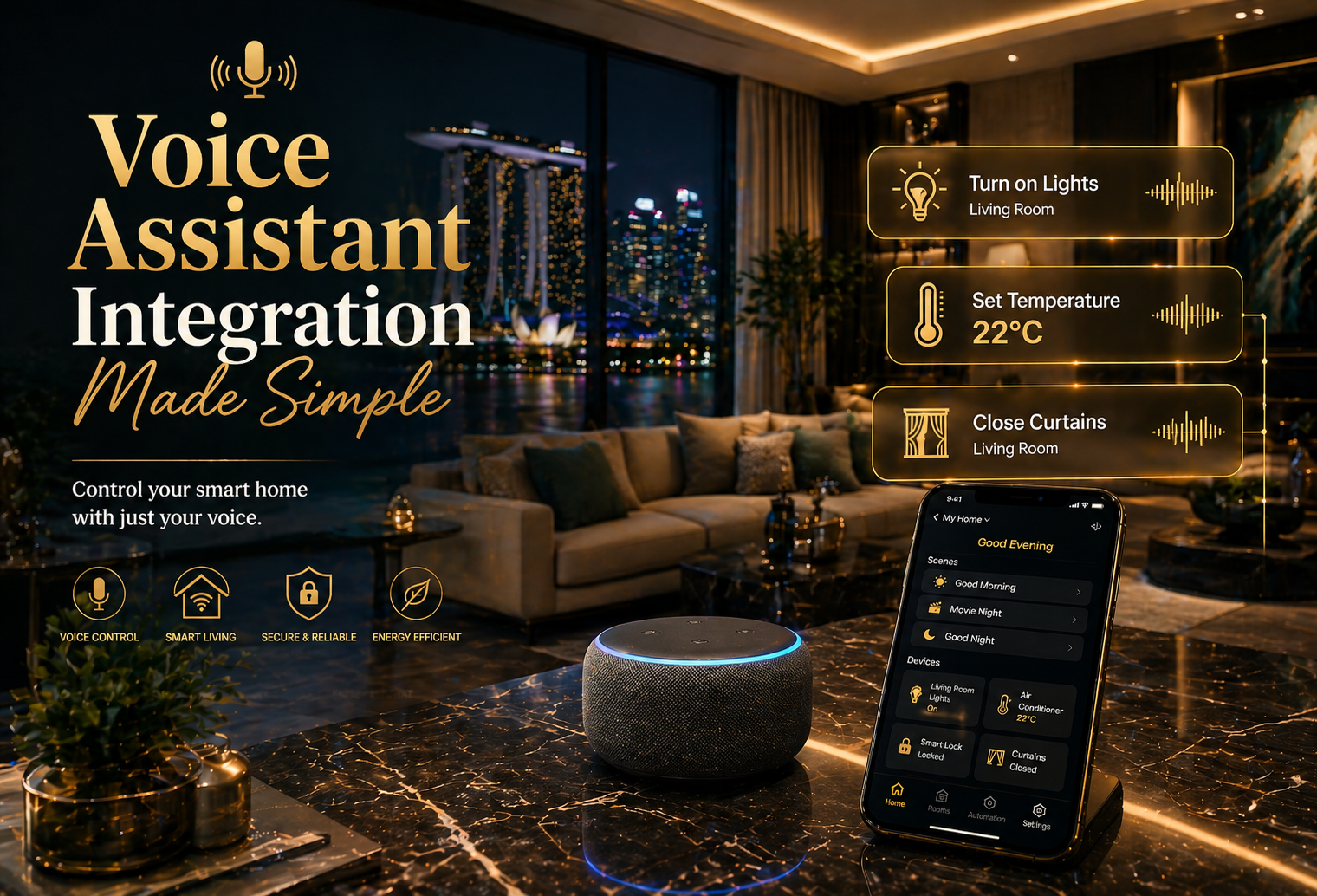
Voice assistants used to feel like a bonus feature. Now, they’re quickly becoming the backbone of how a modern Smart Home actually works.
Instead of tapping apps or walking around flipping switches, people are controlling lights, air conditioning, security systems — even entertainment — just by speaking. It’s a small shift in behavior, but it changes how a home feels day to day.
In Singapore, adoption is moving faster than most people expected. High internet penetration, smaller living spaces, and a growing focus on convenience all play a role. But more than anything, it’s about lifestyle. People want things to just work — quietly, in the background.
What makes voice integration stick is how naturally it blends into daily routines. Saying “turn off the lights” before bed or checking your door lock while rushing out doesn’t feel like using technology anymore. It just becomes habit.
If you’re thinking about upgrading your home, understanding how these systems work — and choosing the right ecosystem — is where everything starts. The options today are powerful, but picking the wrong one can create friction later.
Understanding the Core Ecosystems: Alexa vs Google Home vs HomeKit
When it comes to voice assistants, everything revolves around three main ecosystems: Alexa, Google Home, and HomeKit. On paper, they all do similar things — but in real use, the differences are quite noticeable.
Alexa is usually the most flexible. It works with a wide range of devices and brands, which makes it ideal if you’re building your setup gradually. You don’t have to overthink compatibility too much — it tends to just work.
Google Home leans more toward intelligence. It understands context better, so conversations feel less rigid. If you already rely on Google services like Calendar or Maps, everything connects quite naturally, which makes the experience smoother.
HomeKit takes a different route. It’s more controlled, more curated. The focus is on privacy, stability, and seamless integration within Apple devices. You might get fewer compatible products, but what you do get usually works very cleanly.
At the end of the day, there isn’t a “best” option. It really comes down to how you already use your phone, your apps, and your daily routines. That’s what determines which system will feel right long term.
How Voice Assistants Work in a Smart Home Setup
On the surface, voice control feels simple — you say something, and things happen. Behind that simplicity, though, there’s quite a bit going on.
When you give a command, your voice assistant captures it, processes it (sometimes in the cloud, sometimes locally), and converts it into an action. That instruction is then sent to the relevant device — like a light or air conditioner — which responds almost instantly.
There are three main pieces involved. First, the assistant device itself (like a smart speaker). Second, your home network, which connects everything together. And third, the actual smart devices that carry out the commands.
In Singapore homes, network quality is something people often underestimate. Since most systems rely heavily on WiFi, a weak or uneven connection can make everything feel unreliable. Even a good setup can become frustrating if the network isn’t stable.
Newer systems are starting to process commands locally, which speeds things up and improves privacy. For users who are more cautious about data, this is becoming an important factor to consider.
Benefits of Voice Assistant Integration for Singapore Homes
The biggest shift with voice assistants isn’t just convenience — it’s how you interact with your home as a whole.
Instead of juggling multiple apps or controls, everything becomes centralized through simple commands. That alone makes daily routines feel lighter.
For Singapore homes, where space is often compact, efficiency matters even more. Being able to control multiple things at once — like turning off all lights or activating a night routine — saves both time and effort. It also reduces the need for physical switches, which helps keep spaces clean and minimal.
Energy management is another underrated benefit. Once you combine voice control with automation, it becomes much easier to avoid unnecessary usage. For example, setting routines to switch off air conditioning when you leave can quietly reduce costs over time.
Security also becomes more responsive. You can check locks, activate cameras, or trigger alarms without jumping between apps. In situations where speed matters, that simplicity helps.
Over time, the experience becomes less about “using tech” and more about living in a space that responds to you. That’s where the real value comes in.
Popular Smart Home Devices Compatible with Voice Assistants
The effectiveness of any voice setup depends on the devices you connect to it. Fortunately, most modern Smart Home products are built to support at least one major ecosystem.
Lighting is usually where people start. It’s simple to set up, easy to control, and you immediately feel the difference — especially when adjusting brightness or switching scenes with your voice.
Climate control is another common upgrade. In Singapore’s weather, being able to adjust air conditioning without reaching for a remote — or even before you get home — is a small luxury that quickly becomes essential.
Motorized curtains are becoming more popular too. Opening them in the morning or closing them at night with a simple command adds both convenience and a bit of a premium feel.
On the security side, devices like cameras, smart locks, and sensors integrate well into voice systems. They give you more visibility and control, even when you’re not physically at home.
Then there’s entertainment — TVs, speakers, music systems. Once everything connects, your home starts to feel more immersive, not just functional.
When all these pieces come together properly, you’re no longer just adding gadgets. You’re building a system that actually works as one.
Alexa vs Google Home vs HomeKit: Which Is Best for You?
Choosing the right ecosystem is less about features and more about fit. All three platforms — Alexa, Google Home, and HomeKit — are capable, but they serve different types of users.
If you value flexibility and wide compatibility, Alexa is usually the safest choice. It allows you to build your Smart Home gradually without worrying too much about brand restrictions. This is especially useful if you’re experimenting or upgrading in phases.
If intelligence and natural interaction matter more, Google Home stands out. Its ability to understand context makes Voice Assistant Integration feel more fluid, particularly for users who prefer speaking naturally rather than issuing structured commands.
For those deeply invested in Apple products, HomeKit offers the most seamless experience. Everything works together smoothly, and the added layer of privacy is a strong advantage. It’s less flexible, but more controlled.
Pricing also plays a role. Alexa and Google Home setups tend to be more accessible, while HomeKit systems often lean towards the premium side due to stricter hardware requirements.
Ultimately, the best choice depends on your lifestyle. Your phone, your daily habits, and even how you prefer to interact with technology will shape which ecosystem feels right in your home.
Real-World Smart Home Use Cases in Singapore
Voice Assistant Integration becomes much clearer when you look at how it’s actually used in real homes. In Singapore, where living spaces and lifestyles vary, Smart Home setups tend to adapt accordingly.
In condominiums, space efficiency is key. Voice control allows homeowners to manage lighting, air conditioning, and curtains without adding more switches or clutter. A simple command can transform the entire room, which fits well with modern, minimalist interiors.
For landed properties, the scale changes. Larger homes benefit from centralized control, where voice commands can manage multiple zones — from outdoor lighting to indoor security systems. It reduces the complexity of handling different areas separately.
Rental setups are also evolving. With wireless Smart Home devices and voice assistants, tenants can create their own automated environment without permanent installations. This makes Voice Assistant Integration more accessible, even for short-term living.
Family households see another layer of value. Parents can manage routines for children, while elderly family members benefit from easier control without needing to navigate apps. In many cases, voice control becomes a bridge between technology and usability.
Smart Home Automation Scenarios with Voice Assistants
This is where Voice Assistant Integration moves beyond basic control and starts delivering real value. Instead of reacting to commands, your Smart Home begins to anticipate routines and automate them.
Take a simple “Good Morning” scene. With one phrase, your lights gradually turn on, curtains open, and air conditioning adjusts to a comfortable level. It’s a small detail, but it changes how your day starts — smoother, less rushed, and more intentional.
“Good Night” works the same way, but in reverse. Lights turn off, doors lock, and security systems activate. You don’t need to double-check every room anymore. The system handles it for you in seconds.
Security scenarios are also common. When you say “I’m leaving,” your Smart Home can shut down non-essential devices, turn off appliances, and activate cameras or motion sensors. It’s a simple command, but it adds a strong layer of protection and peace of mind.
Energy-saving routines are another practical use case, especially in Singapore where air conditioning usage is high. Automations can adjust cooling based on time, occupancy, or even weather conditions. Over time, this helps reduce unnecessary usage without affecting comfort.
Entertainment is often overlooked, but it’s one of the most enjoyable parts. You can dim lights, turn on your TV, and play music with a single command. When everything works together, your home feels more responsive — almost like it understands your preferences.
Integration with Existing Smart Home Systems
Not every homeowner is starting from scratch. Many already have some level of Smart Home setup, which makes integration a key consideration when adding Voice Assistant Integration.
The first question is whether your current devices are compatible. Most modern Smart Home products support at least one major ecosystem, but it’s always important to check. A mismatch here can limit what your voice assistant can actually control.
For older setups, retrofitting is usually possible. Instead of replacing everything, you can add smart switches, hubs, or bridges that connect existing systems to your voice assistant. This is a practical approach for homeowners who want to upgrade without major renovations.
Smart hubs play a crucial role in more complex systems. They act as a central point that connects different devices and protocols, making communication smoother. Without a hub, some setups can feel fragmented, especially when mixing brands.
In Singapore homes, where space and wiring constraints are common, wireless solutions are often preferred. They allow for easier integration without disrupting the existing layout.
Installation Options in Singapore
When it comes to setting up Voice Assistant Integration, homeowners typically choose between a DIY approach or working with a professional Smart Home provider.
DIY setups are appealing because they seem straightforward. Many devices today are designed to be plug-and-play, allowing you to connect lights, plugs, and speakers within minutes. For small setups, this works well and keeps costs low.
However, as your Smart Home grows, complexity increases. Managing multiple devices, ensuring compatibility, and setting up stable automations can become time-consuming. This is where professional installation starts to make more sense.
Working with a provider like livingart.sg offers a more structured approach. Instead of piecing things together, you get a system that’s planned from the start — with compatibility, scalability, and usability in mind.
Professionals also handle network planning, which is often overlooked. A strong WiFi setup is critical for Voice Assistant Integration to work reliably. Without it, even the best devices can feel inconsistent.
Another advantage is ongoing support. As your needs change, your Smart Home can evolve without requiring a complete overhaul. This long-term flexibility is often what separates a basic setup from a truly well-designed system.
Costs of Voice Assistant Integration in Singapore
Cost is often one of the first questions homeowners ask, and the answer depends heavily on how far you want to take your Smart Home setup.
At the entry level, you can start with a relatively small investment. A smart speaker, a few smart plugs, and lighting controls are enough to experience basic Voice Assistant Integration. This setup is ideal for beginners who want to test the concept before committing further.
Mid-range systems typically include more integrated devices — such as air conditioning control, motorized curtains, and basic security features. At this stage, automation becomes more noticeable, and the home starts to feel genuinely “smart.”
Premium setups take things further. Fully integrated Smart Home systems can include centralized control, advanced automation scenarios, and seamless integration across all rooms. These setups are usually planned professionally and designed for long-term use.
Several factors influence pricing. Device quality, ecosystem choice, installation complexity, and customization level all play a role. Home size also matters — larger spaces naturally require more devices and planning.
Rather than focusing only on cost, it’s more useful to think in terms of value. A well-designed system improves daily convenience, energy efficiency, and even property appeal — benefits that extend beyond the initial investment.
Common Mistakes to Avoid When Setting Up Voice Assistants
While Voice Assistant Integration is becoming more accessible, there are still common mistakes that can limit how effective your Smart Home actually is.
One of the biggest issues is choosing the wrong ecosystem. Many homeowners mix devices without considering compatibility, which leads to fragmented control. Once you commit to a platform, it’s important to build around it consistently.
Another mistake is ignoring device compatibility altogether. Not all Smart Home products work with every voice assistant. Skipping this check often results in devices that can’t be controlled as expected.
Overcomplicating automations is another trap. It’s tempting to create complex routines, but too many conditions can make the system unreliable. In most cases, simpler automations perform better and are easier to maintain.
Network planning is also frequently overlooked. A weak or unstable WiFi connection affects everything — from response time to device reliability. In Singapore homes, where layouts can vary, proper coverage is essential.
Avoiding these mistakes doesn’t require technical expertise. It just requires a bit of planning upfront, which makes a significant difference in how your Smart Home performs over time.
Expert Tips for Optimizing Your Smart Home Experience
Once your Voice Assistant Integration is up and running, the real value comes from how well it’s optimized. A Smart Home shouldn’t just work — it should feel effortless.
Start small and scale gradually. Instead of automating everything at once, focus on high-impact areas like lighting and air conditioning. Once those are stable, expand into security, entertainment, and more advanced routines. This approach avoids overwhelm and keeps the system manageable.
Another key strategy is prioritizing automation over manual commands. Voice control is useful, but the goal is to reduce the need to use it constantly. For example, lights that turn on automatically when you enter a room are often more effective than asking for them every time.
Voice command structure also matters. Keeping phrases simple and consistent improves accuracy. Overly complex or inconsistent commands can lead to delays or misinterpretation, especially in a busy household.
Finally, keep your system updated. Firmware updates, app improvements, and ecosystem upgrades can significantly enhance performance over time. A well-maintained Smart Home evolves with your needs, rather than becoming outdated.
Privacy, Security, and Data Concerns
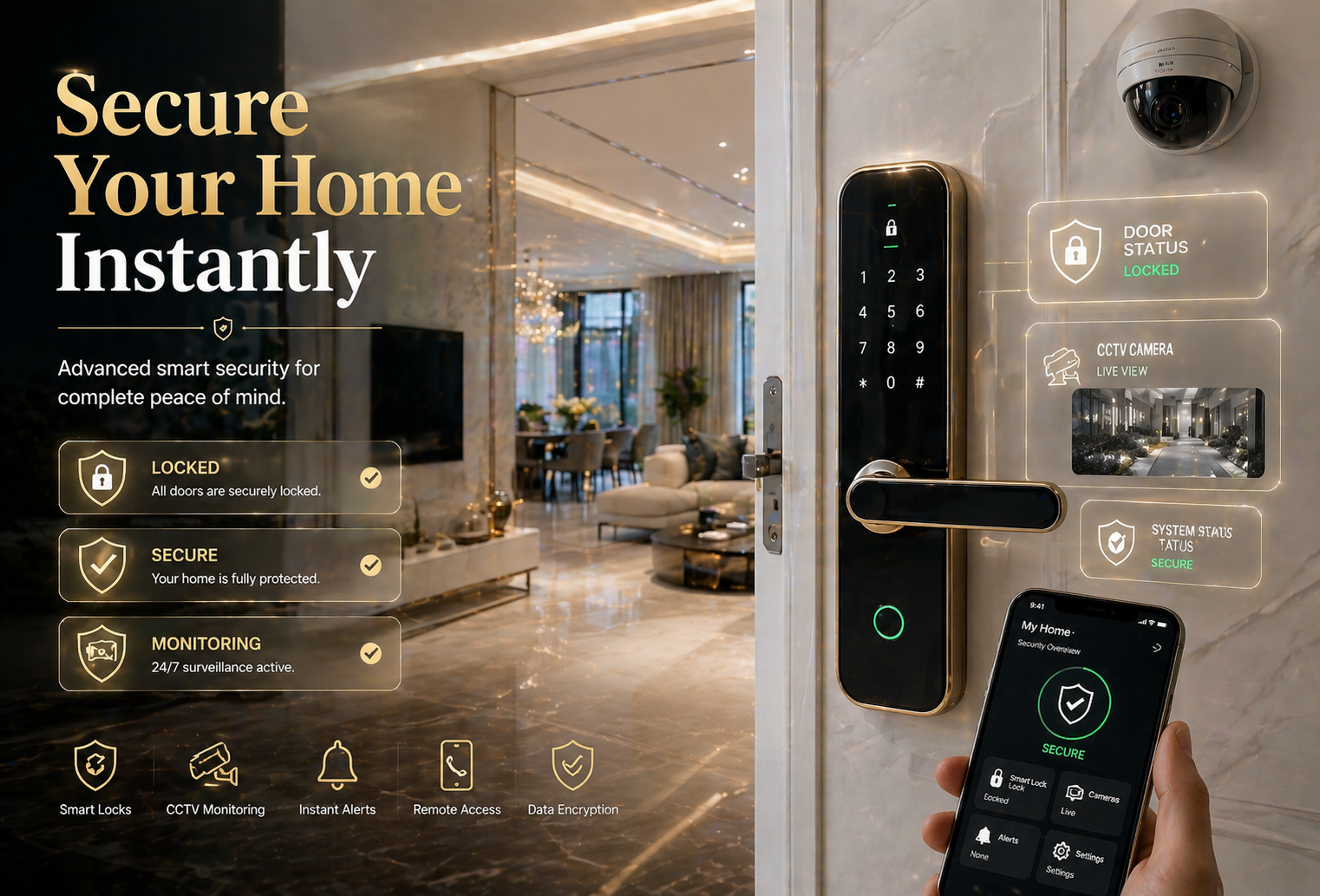
As Voice Assistant Integration becomes more common, privacy and security are naturally top concerns — and rightly so. A Smart Home connected to the internet introduces new layers of data exchange that homeowners should understand.
Voice assistants typically process commands through cloud servers, which means audio data may be transmitted externally. While major platforms have strict policies in place, it’s still important to know how your data is handled and stored.
Security risks often come from weak network setups rather than the devices themselves. An unsecured WiFi network can expose connected devices, making them vulnerable to unauthorized access. This is why strong passwords, network segmentation, and regular updates are essential.
For more privacy-conscious users, some ecosystems offer local processing options. This reduces reliance on cloud communication and keeps more data within your home network. While not all commands can be handled locally, it’s a step towards better control.
Ultimately, a secure Smart Home is about awareness and setup. With the right precautions, Voice Assistant Integration can remain both convenient and safe without compromising user trust.
Why Voice Assistant Integration Is Essential for Modern Singapore Homes
Voice Assistant Integration is no longer just a tech trend — it’s becoming a standard expectation in modern Smart Home design. As lifestyles become more fast-paced, the demand for convenience and efficiency continues to grow.
In Singapore, where urban living often means compact spaces and busy routines, the ability to control multiple systems with minimal effort adds real value. It simplifies daily tasks without adding complexity, which is exactly what most homeowners are looking for.
There’s also a strong lifestyle component. A Smart Home with voice integration feels more responsive and personalized. Whether it’s adjusting lighting to match your mood or automating routines based on your schedule, the experience becomes more tailored.
From a property perspective, smart features are increasingly seen as an upgrade. Homes with integrated systems tend to stand out, especially in newer developments where buyers expect a certain level of technology.
At its core, Voice Assistant Integration enhances how a home functions. It bridges the gap between technology and everyday living, making spaces not just smarter, but more intuitive.
Why Trust a Professional Smart Home Provider – LivingArt.sg
When investing in a Smart Home, the difference between a basic setup and a well-designed system often comes down to expertise.
An experienced provider understands how different devices interact in real-world environments. It’s not just about installation, but about creating a system that works reliably under daily usage. This includes planning device placement, network coverage, and automation logic.
Expertise also ensures compatibility. With so many brands and ecosystems available, choosing the right combination can be complex. A professional approach eliminates guesswork and reduces the risk of issues later on.
Authority comes from proven results. Providers who have worked on multiple Smart Home projects in Singapore bring practical insights that go beyond theory. They know what works — and what doesn’t — in local homes.
Finally, trust is built through ongoing support. A Smart Home isn’t static; it evolves over time. Having a reliable partner ensures your system continues to perform as your needs change.
For homeowners looking at long-term value, working with a professional isn’t just an option — it’s often the smarter decision.
Choosing the Right Voice Assistant for Your Home
By now, it’s clear that Voice Assistant Integration isn’t just about adding voice control — it’s about shaping how your entire Smart Home operates. The right setup simplifies daily routines, improves efficiency, and creates a more responsive living environment.
Each ecosystem offers its own strengths. Alexa provides flexibility and wide compatibility, making it ideal for users who want options. Google Home delivers a more intelligent, conversational experience, especially for those already using Google services. HomeKit focuses on privacy and seamless integration, particularly for Apple users who value stability.
The key is alignment. Your choice should reflect your lifestyle, the devices you plan to use, and how you prefer to interact with technology. There’s no one-size-fits-all solution — only what works best for your home.
For most homeowners in Singapore, starting with a clear plan makes all the difference. Whether you begin with a simple setup or go fully integrated, the goal remains the same: creating a Smart Home that feels intuitive, reliable, and easy to live in.
Frequently Asked Questions (FAQ)
Which voice assistant works best in Singapore?
There isn’t a single “best” option — it depends on your needs. Alexa is great for flexibility and device compatibility, Google Home excels in intelligence and natural interaction, while HomeKit is ideal for Apple users who prioritize privacy and seamless integration
Can Alexa, Google Home, and HomeKit work together?
Technically, they can coexist in the same home, but they don’t integrate natively with each other. Managing multiple ecosystems often leads to complexity, so it’s generally better to choose one primary platform for your Smart Home.
Do I need a hub for voice assistant integration?
Not always. Many devices connect directly via WiFi. However, for larger or more complex Smart Home setups, a hub can improve stability, speed, and overall system coordination.
Is voice control reliable with Singlish or local accents?
Voice recognition has improved significantly, and most assistants can understand a variety of accents over time. However, using clear and simple commands tends to produce more consistent results, especially in multi-user households.
How much does a smart home with voice control cost in Singapore?
Costs vary depending on the scale. Entry-level setups can start with a few hundred dollars, while fully integrated Smart Home systems can reach several thousand. It ultimately depends on the number of devices and level of customization.
Are voice assistants safe and private?
Major platforms have strong security measures in place, but users should still follow best practices — such as securing WiFi networks and managing device permissions. Choosing ecosystems with local processing options can also enhance privacy.
Can I install a smart home system in a rented property?
Yes. Many wireless Smart Home devices are renter-friendly and don’t require permanent installation. This makes Voice Assistant Integration accessible even for temporary living setups.
What internet speed is required for smooth operation?
A stable connection is more important than raw speed. Most Smart Home devices don’t require high bandwidth, but consistent WiFi coverage throughout the home is essential for reliable performance.